#education The Future of Greece Is Already Taking Shape
Innovation, collaboration, and creativity are already shaping the next generation in Greece. Discover how students across the country engage with the future of technology through robotics competitions supported by Qualco Foundation. In this feature article by HuffPost Greece, we explore the impact of these initiatives and the experiences they create. Read the full story below.
There is a moment just before a robotics competition begins. Focused gazes, final adjustments, a team gathered around a robot that did not exist just a few months ago. Someone is keeping time, someone is taking notes, someone is simply observing the result of an idea brought to life. In that moment, something bigger takes shape.
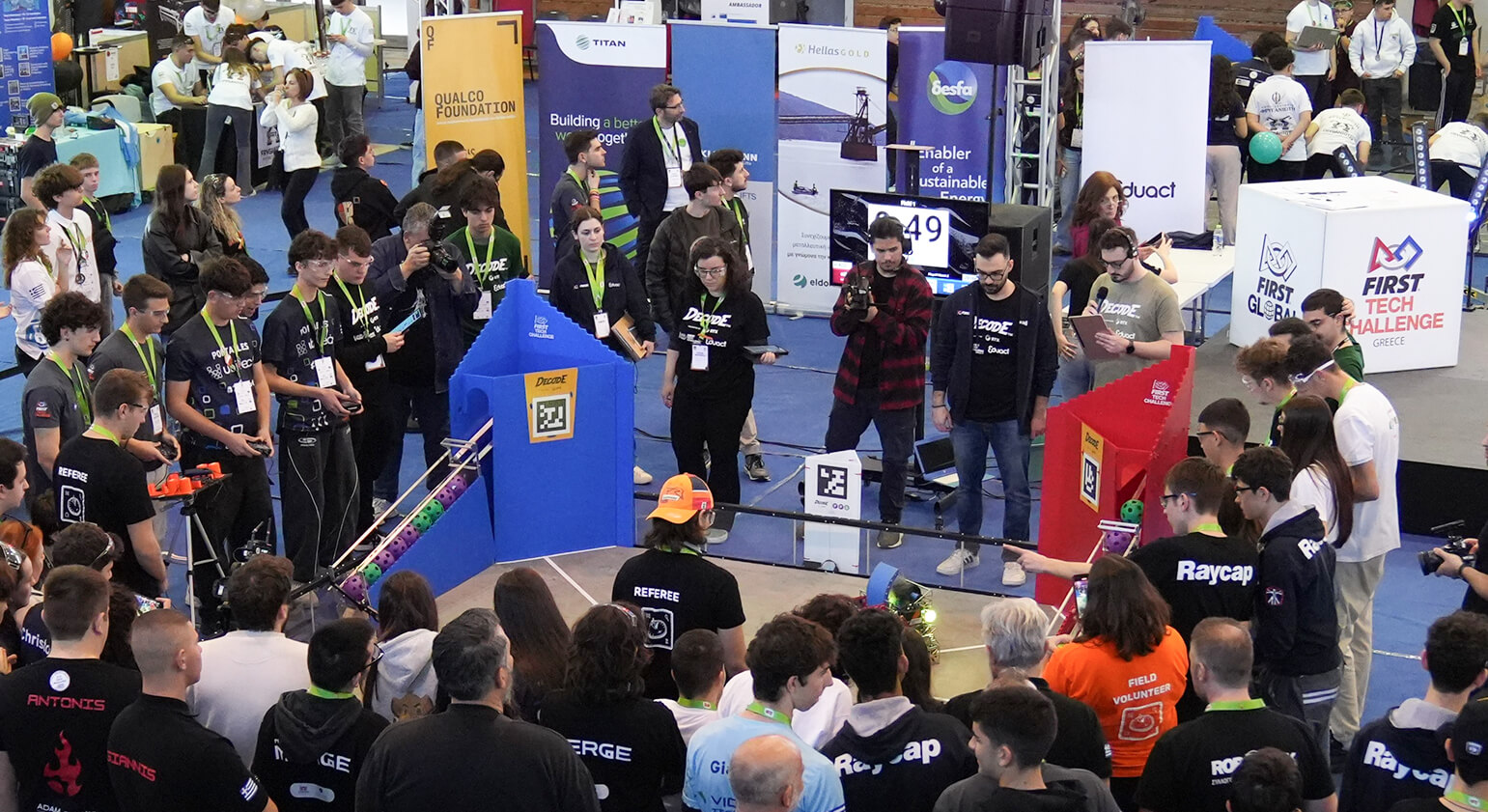
In Thessaloniki, the national FIRST® Tech Challenge (FTC) championships and the FIRST® LEGO® League Challenge (FLL) 2026 finals brought together nearly 1,000 students and young people from across Greece. Dozens of teams from schools and educational organisations, along with mentors, volunteers, and judges, created an environment of intensity, creativity, and collaboration. These robotics competitions are organised by the educational organisation Eduact, with support from Qualco Foundation.
Two weekends filled with presentations, testing, and competitions. A modern learning environment that extends beyond the classroom.
The experience behind the robots
Robotics education in these competitions is not just a theoretical exercise.
Participants design, build, and program robotic applications from scratch. They face challenges, test solutions, fail, and return with new ideas. Through this process, participants develop skills that go beyond technology: critical thinking, creativity, collaboration, communication, and persistence. And alongside all these, something less measurable but equally important is also developed: the joy of participation.
“The adrenaline it brings, the fact that all teams come together and have fun while competing. We may be rivals on the field, but afterwards we are friends, we have fun, and we dance. That’s what we love most,” says Ariadni from RoboticAllienz.
The intensity of the competition coexists with a strong sense of community.
FTC: A first introduction to the world of industrial robotics
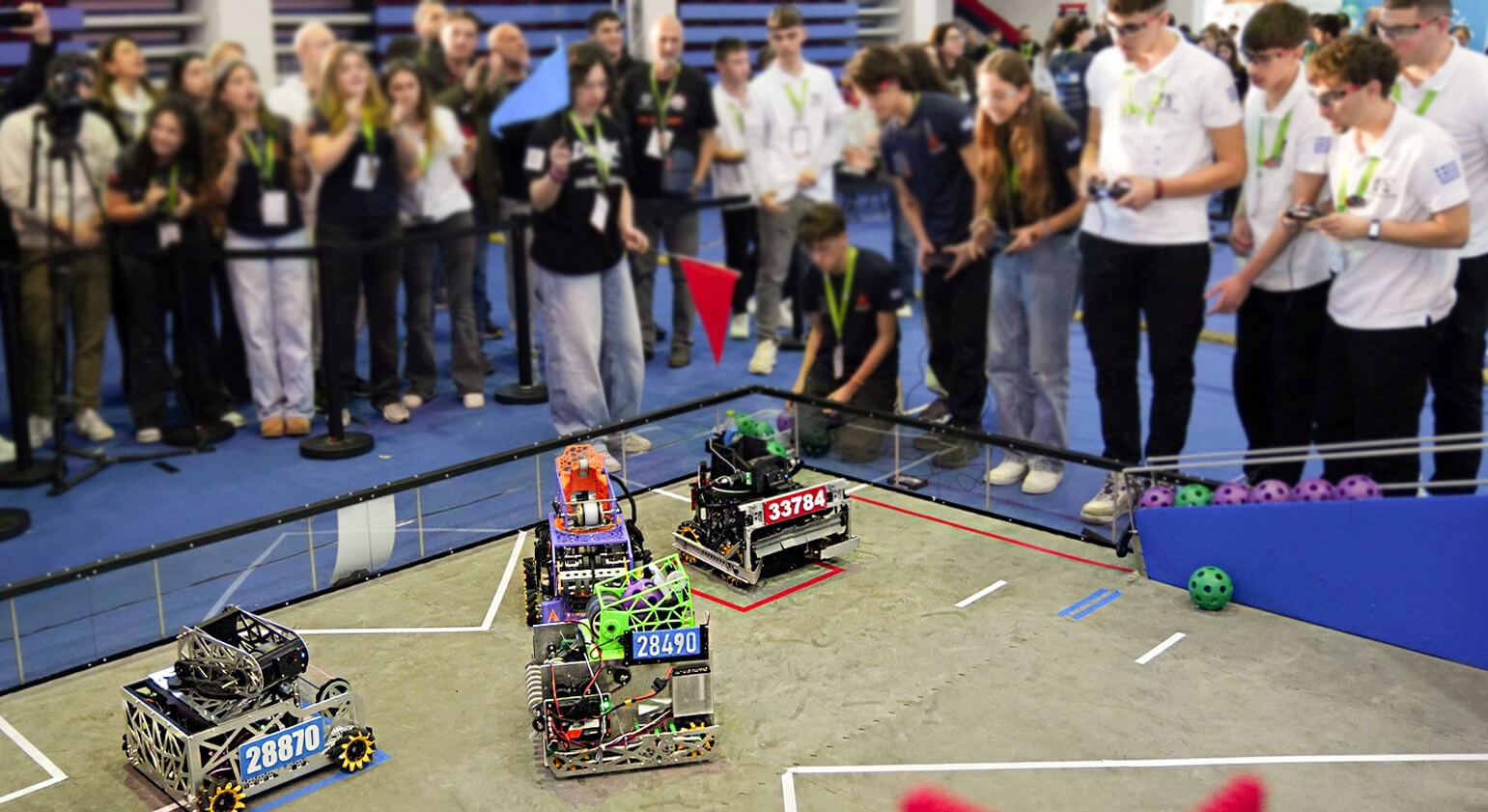
FIRST® Tech Challenge is aimed at students aged 12 to 18 and introduces participants to conditions that resemble real-world projects.
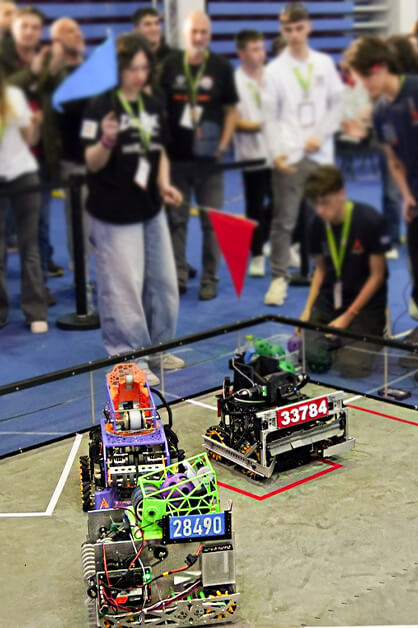
Teams design and build advanced robots that compete in a dynamic environment with specific rules. Every decision matters. Every detail affects the outcome.
This experience brings students closer to professional environments and helps them understand how technology operates in real time.
“I haven’t participated in FTC before, we are a new team, but I’m having a great time and it’s a wonderful experience. FIRST has helped me and made me feel welcome,” says Tereza from the Automatrons.
In this year’s final, the top eight teams secured participation in four international competitions, confirming the high level of the Greek teams.
FLL: Innovation starts early
FIRST® LEGO® League is aimed at students aged 9 to 16 and brings robotics closer to the school experience.
Students build LEGO robots while also developing an innovation project based on a specific theme. Preparation begins months in advance, within the classroom: research, idea development, design, and implementation.
In this year’s final, 55 teams participated after qualifying through regional competitions held in Athens, Rhodes, Crete, and Thessaloniki. The teams that qualified will go on to compete in international competitions.
This year’s UNEARTHED™ theme added a different dimension. Teams were challenged to connect technology with history, identify problems faced by archaeologists, and propose solutions using STEM tools.
Technology meets culture in a meaningful way.
A Generation That Works As A Team
These competitions highlight a generation that works collectively.
Students share roles, manage time, and make decisions. They learn to listen, to disagree, and to move forward together.
“I’m very happy and excited because this is my first time participating in this competition. The interaction with other teams was great. We exchanged ideas, and overall, I had a really positive experience,” says Konstantinos from team RGB.
This experience creates a different relationship with learning, one that is more active, more participatory, more meaningful.
Qualco Foundation: Consistent support
In such an environment, the presence of stable supporters becomes particularly important.
Qualco Foundation, the non-profit initiative of Qualco Group, participated as a Silver Sponsor of both national competitions, supporting initiatives that cultivate future-ready skills and empower the younger generation.
This approach is part of a broader strategy focusing on digital literacy, the connection between education and the job market, and equal access to learning opportunities.
Support for such initiatives is consistent and long-term.
A characteristic example is the Foundation’s support of the National Robotics Team, which ranked fourth worldwide among 191 countries at the 2024 Robotics Olympiad in Athens and received the Zhang Heng Award for Engineering Design in 2025 in Panama.
These results demonstrate what can be achieved when investment in the younger generation is sustained over time.
The Future Is Already Being Written
The images from Thessaloniki are not just snapshots of an event, but a glimpse into what the future can look like.
Students who think, collaborate, and create. Who apply in practice what they learn. Who gain experience even before entering the job market.
The future is built in moments like these. Through teams, ideas, and efforts that begin early in life.
Within this context, initiatives such as those supported by the Qualco Foundation provide the tools and opportunities for a new generation to take its first steps forward.