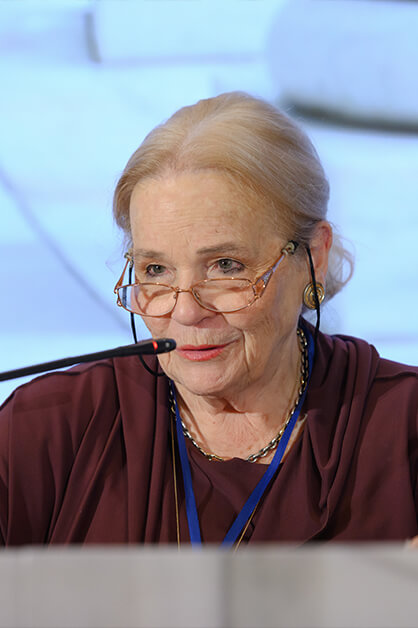
#solidarity The Global Significance of the Greek Language and the Role of the Greek Language Institute
Spoken for centuries and rooted in history, the Greek language continues to shape culture, identity, and thought across borders. In this CNN Greece article, its growing global presence is explored, along with the role of the Greek Language Institute (INEL), a core initiative of Qualco Foundation. Read the full story.
Words such as democracy, economy, school, dialogue, and theatre share two key characteristics.
First, they are used daily by over 380 million native speakers of English worldwide. Second, they have Greek roots. At the same time, approximately 13 million people around the world speak Greek, with the majority living in Greece and Cyprus.
While this number may seem small compared to other languages, the importance of the Greek language is significant. It has been spoken for 40 centuries and written continuously for 28 centuries—the longest period in Europe. It is no coincidence that in 2025, UNESCO proclaimed 9 February as World Greek Language Day, following an initiative by the Permanent Mission of Greece to the organisation.
Multilingualism and the global spread of the Greek language
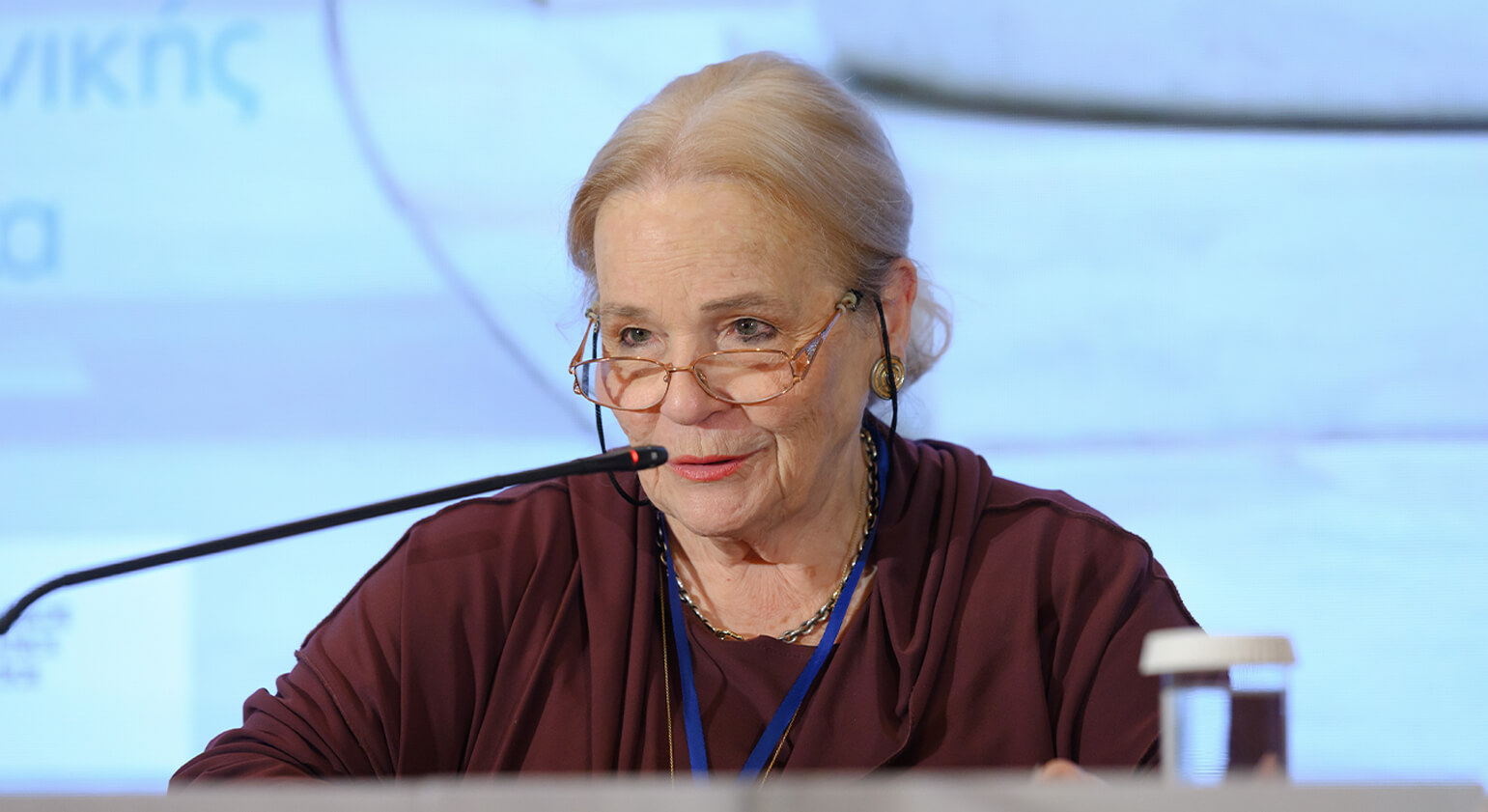
As multilingualism plays an important role in bringing people and cultures closer together, the need to preserve and promote the Greek language worldwide becomes increasingly clear. This goal lies at the heart of the Greek Language Institute (INEL), founded in 2024 as an initiative of Qualco Foundation and Qualco Group. As its President, Ms. Evangelia Georgantzi, notes, “Greek is not only a means of communication, but a carrier of culture, history, and identity.”
In this context, the Institute relies on the collaboration of educators, universities, diaspora communities, and international institutions, setting specific goals. These include enriching modern teaching materials for Greek as a foreign language through the use of new technologies and additional support languages, such as Chinese; offering online training seminars for teaching communities worldwide; organising free conferences, workshops, and lectures, such as the 1st International Conference on Teaching Greek as a Second/Foreign Language and Multilingualism, held in Athens in June 2025; and supporting schools, educational institutions, teachers, and students around the world where Greek is taught as a foreign language.
Growing interest in the Greek language
UNESCO recognises the importance of the Greek language, but what is happening beyond international organisations? The International Conference organised by the Greek Language Institute in collaboration with the Department of Modern Greek Studies of the University of Strasbourg, with the participation of 17 universities from around the world, showed that there is “strong and growing interest in the Greek language worldwide,” as Ms. Evangelia Georgantzi observes. The Institute is already preparing its 2nd International Conference on Greek as a Foreign Language, planned for 2027.
The younger generation of Greeks abroad lies at the heart of the Institute’s mission, as the Greek language can serve as a bridge for identity, culture, and creativity. When it comes to engaging them, Evangelia Georgantzi highlights the importance of modern tools combined with scientifically grounded and engaging content, elements that can make learning Greek feel both accessible and worthwhile, as “a language that speaks to them and reflects who they are”. In this way, Greek can be seen “not as an obligation, but as an opportunity for a distinctive and enriching education,” especially when “knowledge of Greek is highly valued in the portfolios of prospective students applying to leading universities worldwide”.
Innovation and new technologies
As part of its use of contemporary tools, the Greek Language Institute (INEL) has created the innovative online platform KIVOTOS (K.INEL), featuring educational material for teachers that is freely accessible to anyone interested. There, visitors can find training seminars on YouTube, presentations from the 1st International Conference on Greek Language, articles and interviews, while the platform will also be enriched with “Apotypomata”, a series of interviews with leading intellectual figures.
It is worth noting that INEL’s seminars are attended by 600 educators from around the world. In fact, the latest seminars attracted participants from 33 countries across all continents, proving that “technology gives us the ability to overcome geographical and linguistic boundaries”.
The contribution of Qualco Foundation and the Qualco Group
The Greek Language Institute is an initiative of Qualco Foundation and Qualco Group, proving that “language is not only a matter of education, but a collective responsibility,” with Ms Georgantzi underlining that their contribution is “decisive”.
Initiatives such as the Greek Language Institute and the Institute of Greek Music Heritage, both supported by Qualco Foundation, bring a modern and dynamic approach while expanding access to a wider audience, “especially with the backing of a group of the size and reach of Qualco Group, and by extension Qualco Foundation”.
A personal mission: advancing the teaching of Greek
Evangelia Georgantzi is not only the President of INEL, but also an educator who has devoted four decades to promoting the Greek language and developing educational materials for teaching Greek as a foreign language, with extensive experience in the field.
For her, the Institute is “the culmination of a long journey, but at the same time a new beginning.” Her personal mission is “to advance the teaching of Greek through modern methods, new and continuously improving educational material, and new support languages, while always preserving its cultural core and investing in the quality of everything we create. To make our language living, accessible, and creative for everyone.”
The first year in review and the next steps
INEL has completed its first year of operation, which can be described as particularly dynamic. Its activities to date reflect this, including the 1st International Conference on Teaching Greek as a Second/Foreign Language and Multilingualism, training seminars for educators, and interactive programmes with schools around the world. It has also laid the foundations for further expansion, including the introduction of additional support languages for teaching Greek as a foreign language.
Αt the same time, it is already planning its next steps. In addition to its 2nd International Conference, INEL will host an event in Cyprus in June 2026, including a training seminar at an international school it supports, with the participation of educators, schools, and organisations where Greek is taught as a foreign language. It will also soon launch the INEL Book Club, with “many surprises for children, parents, and teachers.” Further priorities include expanding international collaborations, strengthening its digital presence, developing new language tools, and creating initiatives that bring the Greek language closer to younger generations, wherever they may be.