#education Building the Future Through Robotics Education
From the classroom to real-world application, robotics is redefining how young people learn, collaborate, and innovate. Τhe following article by iEidiseis explores how students across Greece are turning ideas into action through the FIRST® competitions, supported by Qualco Foundation.
Robotics in education is often misunderstood as a purely technical activity involving wires, code, mathematics, and physics. Rather, it is part of what is often described as STEM education, where scientific knowledge meets imagination, inspiration, and the ability to solve everyday problems, helping students evolve from passive users of technology into active creators of the future.
The recent FIRST® Tech Challenge (FTC) and FIRST® LEGO® League (FLL) Greece 2026 robotics competitions, held in Thessaloniki, demonstrated that when young people are given the right tools, they do not simply build machines; they develop a new perspective on collaboration and innovation.
Qualco Foundation, the non-profit initiative of Qualco Group, supported this year’s events, investing in the empowerment of a new generation that is learning how to create solutions for the challenges of tomorrow.
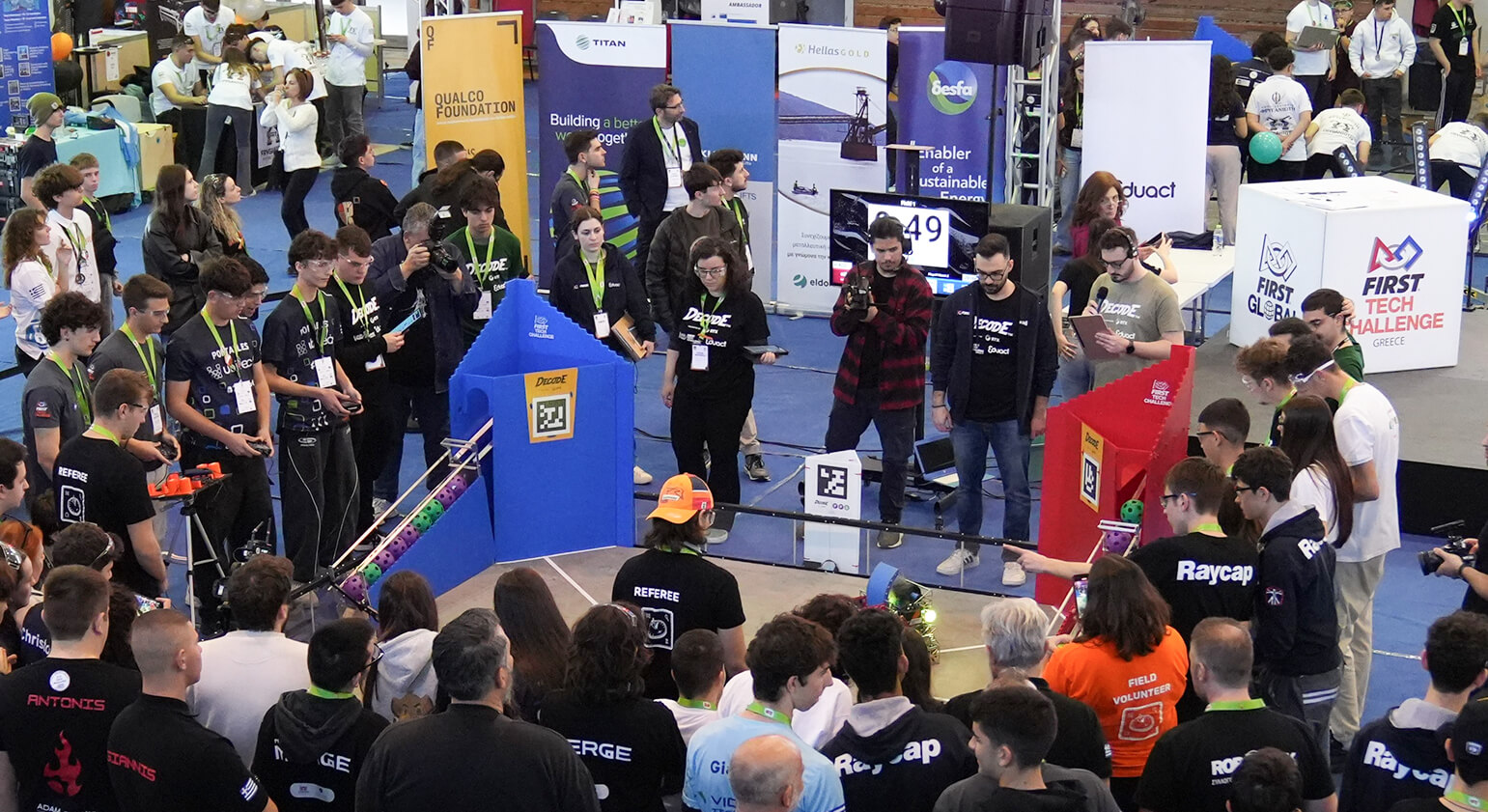
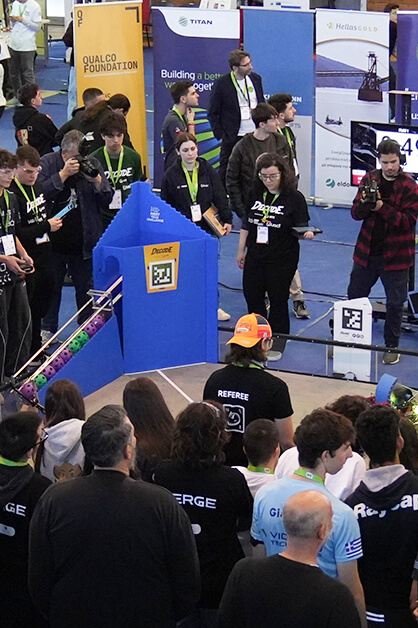
For two consecutive weekends, these national competitions, organised by the educational organisation Eduact, brought together dozens of school teams, mentors, judges, and volunteers, forming part of a growing ecosystem where experiential learning, creativity, and collaboration take centre stage.
Two competitions, two approaches to learning
The two competitions target different age groups but share the same philosophy.
FIRST® Tech Challenge introduced students aged 12 to 18 to industrial robotics through the design and programming of more advanced systems, in an environment that resembles real-world conditions. At the same time, FIRST® LEGO® League introduced younger students (aged 9 to 16) to the world of technology in a more holistic way, combining robotics with the development of innovative projects.
This year’s FIRST AGE™ theme added a compelling dimension by connecting technology with history and culture. Teams were invited to focus on challenges related to archaeology, seeking solutions that bridge the past with the present and the future.
Overall, the participation of nearly 1,000 students and the selection of 21 teams that will represent Greece in international competitions confirm the strong potential emerging from schools across the country.
“I really enjoyed interacting with other teams. We exchanged ideas, and overall, it was a very positive experience,” says Konstantinos, who participated for the first time with team RGB.
What really happens in a robotics competition
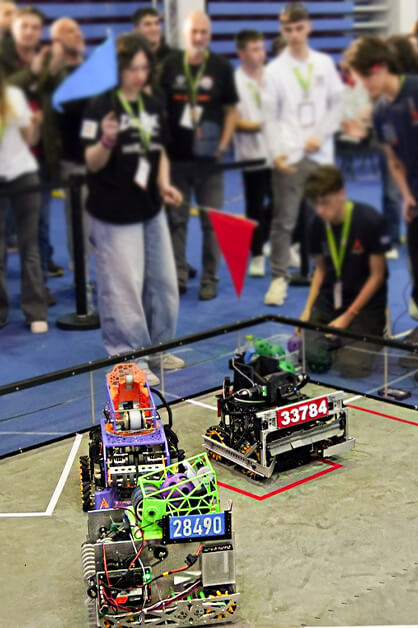
When we see images from robotics competitions, we often notice teams of students fully engaged in designing, building, and programming their robots, giving form to their ideas.
However, this is not simply a competition. It is an experience that closely resembles real working conditions. In this way, students reverse their traditional role: they are not just recipients of knowledge, but creators of solutions, collaborators, and active learners developing future-ready skills.
They have the opportunity to design, build, program, and present robotic applications, going through every stage of a real creative process in a professional environment. In the case of FIRST® LEGO® League, preparation begins months in advance in the school robotics classroom. Along the way, students encounter challenges, try again, collaborate, and ultimately arrive at solutions that are not theoretical but practical.
Through this process, participants develop skills that go beyond technology, including critical thinking, teamwork, persistence, and communication. Beyond the competition itself, just as important are the connections formed through this shared experience.
“The adrenaline it brings, the fact that all teams come together and have fun while competing. We may be rivals on the field, but afterwards we are friends, we have fun, and we dance”, says Ariadni from the RoboticAllienz team in Vari.
The role of Qualco Foundation
Qualco Foundation, the non-profit initiative of Qualco Group, participated as a Silver Sponsor of both competitions, investing in experiences that allow young people to apply in practice the skills that will accompany them into the future.
Through such initiatives, students experience first-hand what it means to collaborate, solve problems, and develop an idea from concept to implementation.
For Tereza, a member of the Automatrons team, in their first year of participation in FTC, the value of participation goes beyond the technical aspect: “I haven’t participated before, but I’m having a great time. FIRST has made me feel welcome.”
In this way, education becomes directly connected to the real world, while access to knowledge and future-oriented tools remains open to every student who wishes to explore and grow.
Qualco Foundation’s continued support for robotics education is already delivering results, with international distinctions such as fourth place at the 2024 Robotics Olympiad and major engineering awards in Panama in 2025.
The future is being built now
As technology continues to reshape everyday life, initiatives such as FIRST highlight something essential: the skills of the future are developed early and through hands-on experience.
The students participating in these programmes today are the scientists, engineers, and innovators of tomorrow. Their ability to dream, create, and lead depends largely on the opportunities they are given.
In this context, Qualco Foundation remains actively committed to supporting initiatives that equip young people with the tools they need to confidently meet both current and future challenges.